Shopify review: verdict
Shopify is a sensible platform to shortlist for UK ecommerce teams that want a guided route to launching and running an online store, particularly when day-to-day simplicity and the ability to add capability over time matter more than maximum control from the outset. TechRadar’s 2026 review characterises it as powerful, easy to use and scalable, while also flagging pricing increases and more limited customisation on lower tiers.
That balance is the key to this review. Shopify can reduce the number of technical decisions a lean team has to make, and it supports online, in-person and multichannel selling. But the published plan is only one part of the cost: upgrades, paid themes, apps and payment choices can all change the eventual operating cost.
For a small team with a straightforward catalogue and limited internal technical resource, Shopify is often a practical starting point. For a business that needs unusual storefront behaviour, many staff permissions or a tightly controlled cost base, compare the plan limits and the wider platform options before committing.
What Shopify is and who it suits
Shopify is an ecommerce platform intended to bring key selling activities into one service. Its UK pricing page describes capabilities for selling online, in person and in AI chats, alongside multichannel integration; the available plan range progresses from Basic to Grow, Advanced and Plus.
This model is most relevant to founders, small teams and growing retailers that would rather concentrate on products, orders and marketing than assemble and maintain every part of a commerce stack themselves. A clean setup and interface, an app ecosystem and support availability are among the operational strengths identified in TechRadar’s review.
It is a less automatic fit when the business treats bespoke storefront behaviour, granular internal access or complete architectural control as non-negotiable from day one. Those needs do not rule Shopify out, but they make plan-level feature checks and a comparison with other approaches more important.
Shopify strengths for growing stores
For a lean team, Shopify’s main attraction is operational focus. TechRadar highlights a clean setup and interface, which can make it easier to get from an initial store configuration to routine trading without making technical administration the centre of the business. That is valuable when the same people are handling product selection, fulfilment, customer communication and marketing.
The platform also has room to expand. The independent review identifies an expansive app ecosystem and strong scalability, while Shopify’s UK page presents a progression of plans as requirements become more complex. Grow includes up to five staff accounts; Advanced includes up to 15, live third-party shipping rates and regional store tailoring; Plus adds unlimited staff accounts and a fully customisable checkout. These are meaningful operational differences, not simply labels on a pricing table.
Selling flexibility is another practical strength. Shopify says its plans support online and in-person selling and describes multichannel integration. For a retailer combining a web shop with events, a counter or several discovery channels, keeping those activities within one platform may simplify the operating model. The exact scope still depends on the plan and any connected services.
Payments and support can also matter as order volumes rise. Shopify publishes card rates by tier and lists priority 24/7 phone support for Plus; TechRadar notes payment integrations and 24/7 support among the platform’s strengths. Treat these as prompts to check the current plan details and the payment setup that applies to your business, rather than as a guarantee that every workflow or support channel is identical on every tier.
Shopify limitations and cost watch-outs
Shopify’s limits are mostly about cost accumulation and the point at which a growing business needs a higher tier. TechRadar flags costly plan upgrades, premium themes, advanced features locked behind higher tiers and limited staff accounts on Basic. Shopify’s own UK comparison reinforces that plan progression changes staff capacity and operational features, so the cheapest apparent starting point may not remain suitable as the team or selling model develops.
The monthly or annual plan is not the whole budget. A store may also need a paid theme, additional apps, specialist integrations, a POS add-on or other services. Those choices can be worthwhile, but they should be costed against the business case rather than treated as incidental. The review also identifies transaction fees on third-party gateways as a downside, while Shopify’s UK page publishes tiered card rates. Check the current payment terms that apply to the gateways and cards you expect to use.
Customisation deserves the same scrutiny. TechRadar specifically notes limited customisation on lower tiers, and Shopify reserves a fully customisable checkout for Plus. If conversion flows, brand presentation or back-office permissions need unusual treatment, document those requirements before selecting a plan. A lower-tier store may work well for the first launch, but it is not automatically the lowest-cost long-term choice once workarounds, apps and upgrades are included.
Choosing a Shopify plan in the UK
 Choose a Shopify plan by matching it to the operating model, not by comparing a headline fee in isolation. Start with the number of people who need access, whether you sell only online or also in person, the payment methods you expect to use, and whether shipping or regional store requirements are already material.
The current UK range is Basic, Grow, Advanced and Plus. Shopify positions Basic for solo entrepreneurs, Grow for small teams and Advanced for global reach. The published comparison says Grow supports up to five staff accounts, Advanced up to 15 and Plus unlimited staff accounts. Advanced also adds live third-party shipping rates and regional store tailoring; Plus adds a fully customisable checkout, large-scale POS and B2B capabilities.
That progression suggests a practical selection rule: start with the tier that covers today’s genuine operating needs without relying on known workarounds, then model the likely trigger for an upgrade. Include card rates, third-party payment terms where relevant, apps, themes and any in-person selling add-ons in that model. Before buying, verify the current UK pricing, included features and payment conditions directly with Shopify, because published terms can change.
Shopify alternatives to consider
An alternative is worth considering when Shopify’s trade-off between simplicity and control does not fit the business. If a team wants a hosted service but prefers to compare feature sets, support models or pricing structures, compare Shopify with other hosted ecommerce platforms using the same requirements list.
If the priority is deeper technical control or a more self-directed build, include WooCommerce in the comparison and assess the operational responsibility that comes with that route. If the immediate goal is validating demand rather than running a fully independent store, a marketplace-led approach may also be worth assessing. Neither route is inherently better: the right choice depends on control, technical capacity, sales channels and total cost.
Use a consistent comparison sheet. Record the work required to launch, staff access, payments, shipping, design flexibility, ongoing maintenance and the costs that appear only as the business grows. That makes Shopify’s strengths and constraints easier to judge against a real business model rather than a generic platform ranking.
The bottom line: when to choose Shopify
AI-generated generic editorial illustration — not a retailer product photo and does not depict the reviewed product or service. Illustration supporting this section.
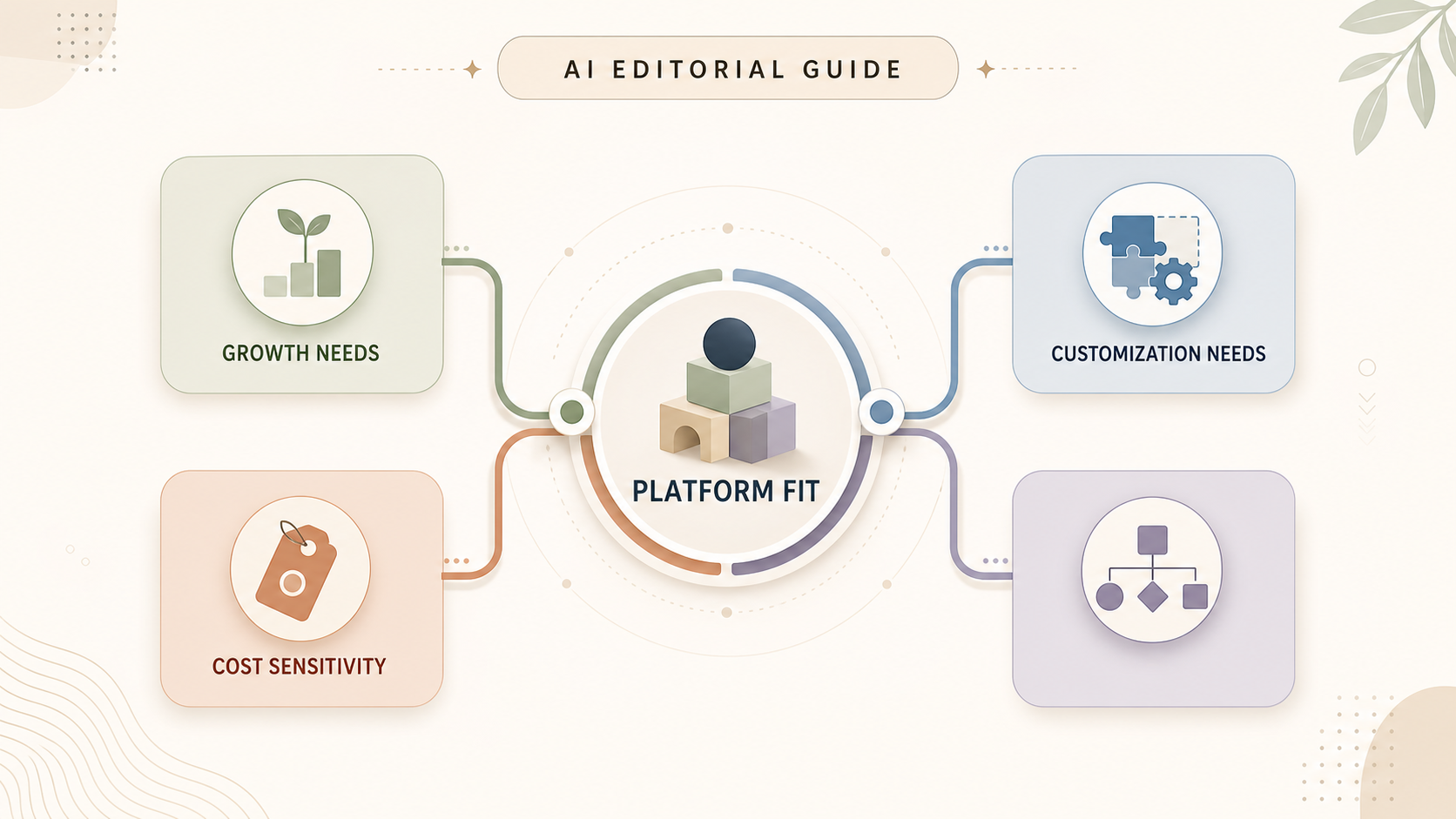 Choose Shopify when a guided ecommerce platform, relatively straightforward operation and the option to expand selling capabilities are more valuable than having maximum custom control at the start. It is especially worth shortlisting for a UK team that expects to sell across online and in-person channels, needs a plan path for a growing team, or wants access to an established app ecosystem.
Pause and compare further when the business expects complex checkout changes, extensive staff requirements on a lower tier, specialised payment arrangements or a tightly constrained all-in budget. In those cases, the decision should rest on a documented total-cost model and the features required now and later—not on a plan label alone.
Before signing up, confirm current plan features, payment terms, staff limits, app dependencies and the upgrade point you would accept. Then compare those answers with at least one hosted alternative and, where control is central, a self-directed option.
{{primary_cta}}
Frequently Asked Questions
Is Shopify suitable for a small UK ecommerce business?
It can be. Shopify’s Basic plan is positioned for solo entrepreneurs, while Grow is positioned for small teams. The platform is likely to suit a small business that values a guided setup, a central place to manage selling activity and a path to add capability as needs develop. Confirm the current UK plan features, staff access and payment terms against your own operating model before deciding.
What Shopify costs should I check beyond the advertised plan price?
Check likely upgrade timing, paid themes, app and integration costs, in-person selling add-ons where relevant, card rates and any third-party payment-gateway transaction fees. TechRadar identifies plan upgrades, premium themes and third-party gateway fees as potential watch-outs. The right comparison is the expected total operating cost, not the subscription alone.
When should I consider an alternative to Shopify?
Consider alternatives when you need more control than a guided platform offers, have unusual customisation requirements, or want to test a different balance of maintenance responsibility and cost. Compare other hosted platforms for a similar operating model, WooCommerce where a self-directed route is relevant, and marketplace-led selling where validating demand is the immediate priority.
Sources
Related reading
- Best E-commerce Tools: evidence-led top choices
- Shopify vs WooCommerce: which is the better fit
- WooCommerce review: who it suits and who should skip it
- How to choose E-commerce Tools for your needs
Editorial information: About our editorial team · Read our editorial policy · Read our affiliate disclosure.